

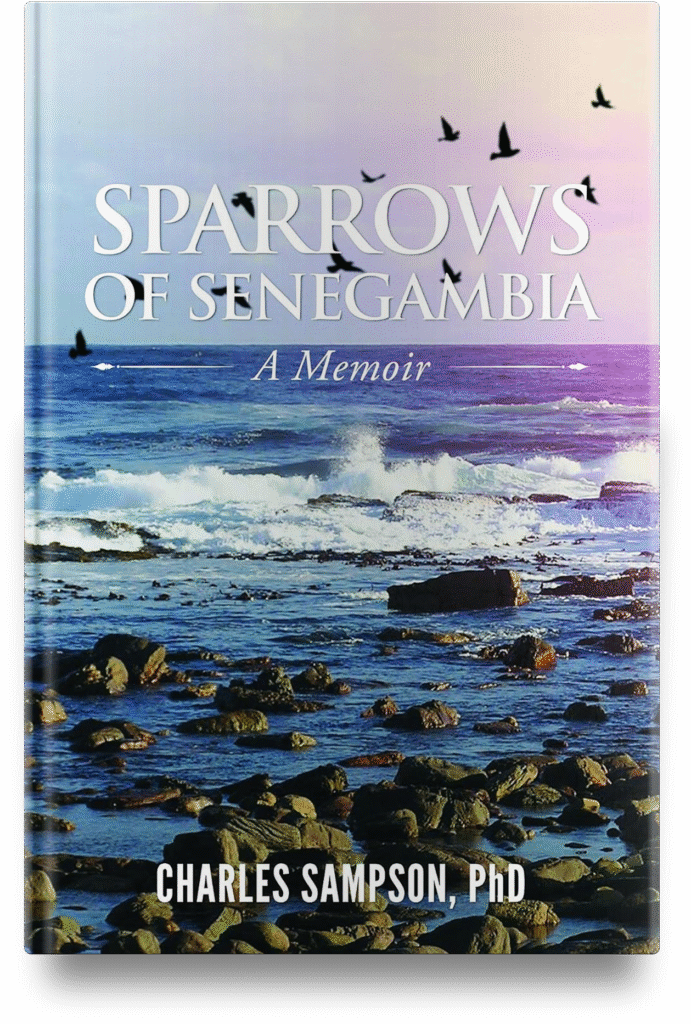
Some memoirs simply recount a life lived—others, like Sparrows of Senegambia, transcend personal narrative and become an exploration of history, identity, and legacy. Charles Sampson’s work is a deeply reflective journey that not only chronicles his own experiences but also ties them to broader socio-political and cultural landscapes. This is a memoir that carries weight, a book that speaks to the past while remaining profoundly relevant to today’s conversations on race, history, and resilience.
What makes Sparrows of Senegambia stand out among memoirs is its intellectual depth and emotional resonance. Sampson is not just telling his story—he’s contextualizing it within the African diaspora, the history of Senegambia, and the enduring strength of the human spirit. His journey from his birthplace through more than a dozen African nations, South America, Europe, and Southeast Asia isn’t just an exploration of geography; it’s a quest for understanding, connection, and meaning. His visit to Gorée Island, one of the most haunting reminders of the transatlantic slave trade, becomes a powerful moment of historical reckoning, bridging the personal with the universal.
The metaphor of the sparrow is particularly striking. By likening his family’s resilience and determination to these small but mighty birds, Sampson paints a vivid picture of perseverance in the face of adversity. This symbolism enriches the  narrative, making it not just a personal memoir, but a meditation on survival, migration, and the unyielding will to rise above challenges.